

Template Rendering
You reference template variables with{{double_brace}} syntax. The data comes from initial_context, including values returned by a Pre-Call Data Fetch, and from gathered_context in Webhook payloads.
The syntax depends on where you use it:
Agent node prompts
In an Agent node prompt, reference eachinitial_context field directly by name. Nested values are supported with dot notation.
Example: if the initial context is
You are Alice, who is talking to {{user.name}}.
Variables extracted during the call (
gathered_context) are not available in Agent prompts — a prompt can only reference initial_context fields. To act on extracted data, send it to a Webhook Node.Webhook Node payloads
When constructing a Webhook Node payload, the context objects are nested under their names, so reference them with theinitial_context. and gathered_context. prefixes:
Payload value: {{initial_context.user.name}} or {{gathered_context.call_disposition}}
Using Template Variables for Testing
Template variables defined in your workflow Settings > Context Variables are included in test calls (both web and phone) made from the workflow editor. This is useful for simulating data that would normally come from telephony.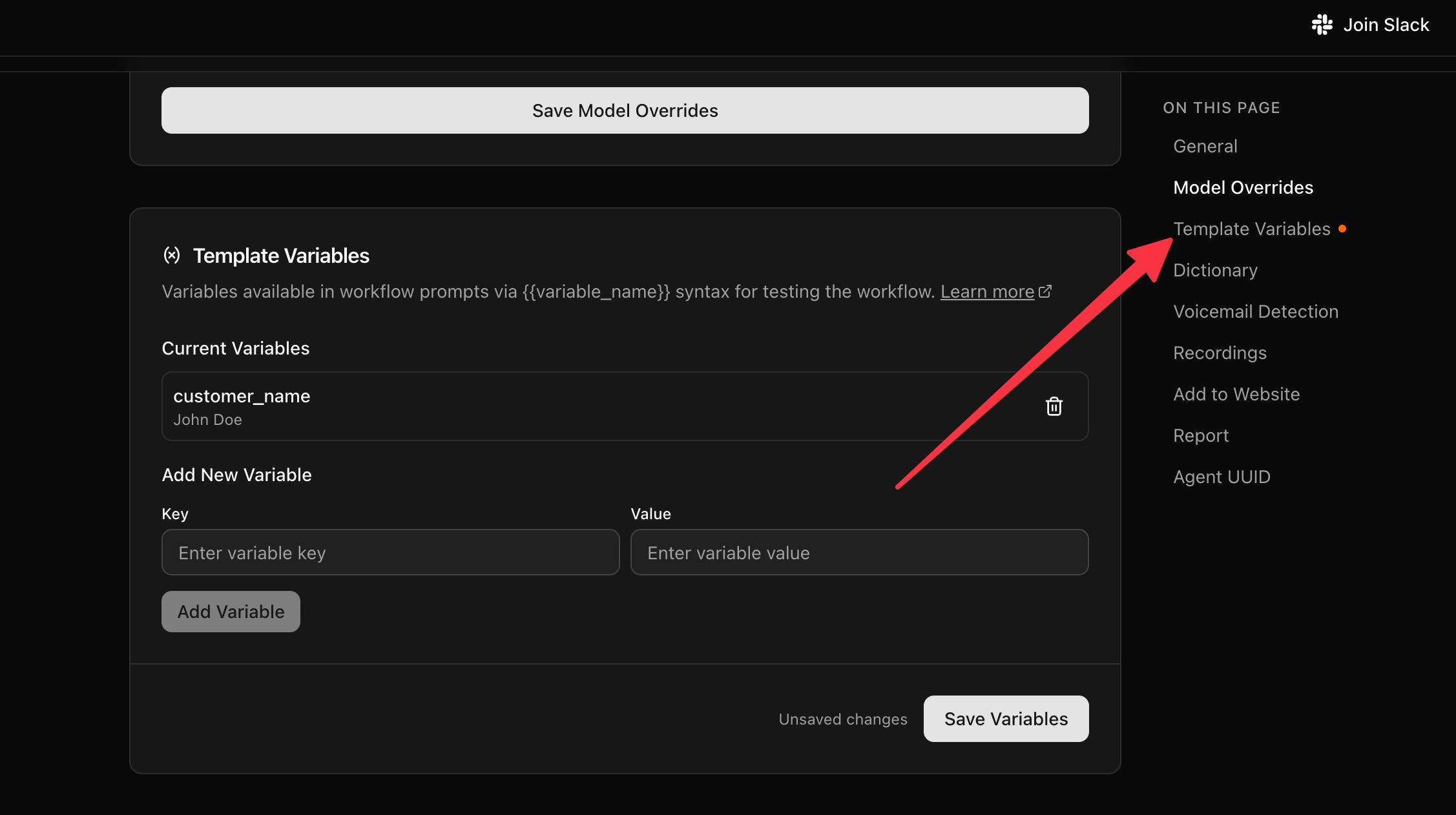
caller_number and called_number as context variables to test Pre-Call Data Fetch without needing a real inbound call.
Browser voice tests use the same context model as inbound calls.
These context variables are only used during test calls from the workflow editor. On production inbound calls, the actual telephony data is used and these values are ignored.